 fun
Random Pickers and Decision Tools: Make Choices Faster
My friends and I once spent twenty minutes deciding where to eat — twenty minutes of "I don't mind, you choose" bouncing back and forth — before someone pulled out their phone, typed the three options into a random picker, and let it decide in one second. Nobody was unhappy with the result, because nobody had really cared which option won; we had just been unable to commit. That is the small, slightly silly, genuinely useful magic of decision tools.
Here is why outsourcing little choices to randomness is more worthwhile than it sounds, and where these tools actually earn their place.
The hidden cost of tiny decisions
Every choice you make, however trivial, spends a little mental energy. Psychologists call the result decision fatigue — the more small decisions you make in a day, the worse your decisions get by evening. The "where should we eat" stalemate is decision fatigue in miniature: the stakes are so low that deliberating is pure waste, yet we do it anyway because someone has to choose.
Random pickers short-circuit this. By handing a genuinely low-stakes choice to chance, you free up the mental energy for decisions that actually matter. It feels almost like cheating, but it is really just recognising which decisions deserve your attention and which do not.
When a decision tool is genuinely useful
Not every decision should be random, obviously — you should not pick a career or a mortgage with a coin flip. But a surprising number of everyday choices are perfect candidates:
- Breaking a tie when you genuinely do not have a preference (lunch, which film, which task first).
- Beating decision fatigue on trivial choices so you stop over-thinking them.
- Settling a stalemate when a group cannot agree and the options are all fine.
- Ensuring fairness — who goes first, who gets the last slice, how to assign chores.
A decision maker is built exactly for the first three: feed it your options and it commits for you, instantly and without agonising. The key test is whether you would be equally happy with any outcome. If yes, randomness is perfect. If you would be gutted by one result, the tool just revealed that you actually do have a preference — which is useful information too.
Fairness: the serious use of randomness
Beyond beating indecision, randomness has a genuinely important role: impartiality. When a choice affects people, a random pick removes bias and the suspicion of favouritism.
This is why you draw names from a hat for a prize, shuffle to assign teams, or randomise the running order. Everyone can see the process is fair because no human thumb is on the scale. A random picker digitises that hat-draw — useful for giveaways, classroom participation, assigning tasks, or any situation where "why did they get picked?" could cause friction.
A quick worked example
Say you are running a small giveaway with eight entrants and one prize. Typing the eight names into a wheel spinner and spinning it does two jobs at once: it picks a winner, and it shows everyone the pick was fair, because they watched the wheel land. Compare that to quietly choosing a winner yourself — same outcome, but now someone wonders if it was rigged. The randomness is not just convenient; it is the proof of fairness.
The flavours of random tools
Different situations suit different tools, and the "right" one is mostly about presentation.
- A simple picker just returns one option from a list — fast and functional, ideal for a quick tie-break. A decision maker covers this.
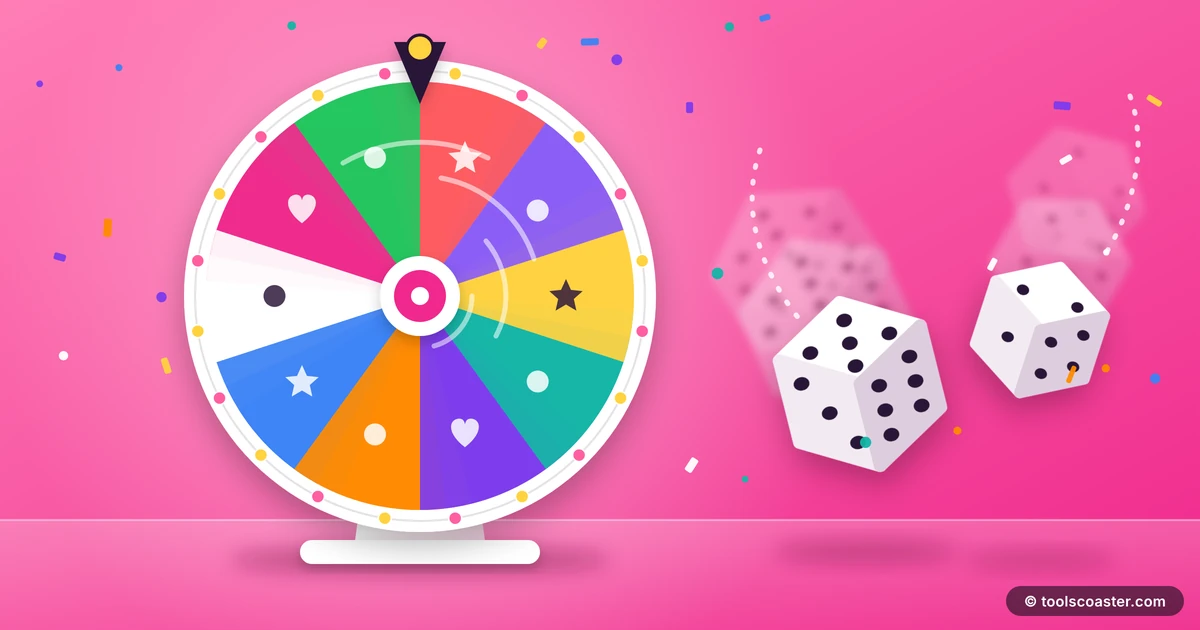
- A wheel spinner turns the pick into a visible, animated event. The spinning is half the point: it makes a group choice fun and demonstrably fair, which is why a wheel spinner is great for classrooms and giveaways.
- A coin flipper handles the pure two-option case — yes/no, this/that — with the familiar ritual of a flip. A coin flipper is the fastest tie-breaker of all.
- A number generator picks within a range, handy for raffles, assigning numbered slots, or games. A random number generator does this precisely.
Are these tools actually random?
A fair question, since the whole value depends on it. These tools use pseudo-random algorithms — deterministic under the hood, but effectively unpredictable for any everyday purpose. For picking a restaurant or drawing a raffle, they are more than random enough; each outcome is unbiased and unforeseeable. (True cryptographic randomness is a different, stricter requirement, reserved for security, not for choosing lunch.)
So yes — for the uses that matter here, the picks are genuinely fair, which is exactly what makes them trustworthy for tie-breaks and giveaways alike.
The takeaway
Outsourcing small, low-stakes choices to a random picker is not laziness — it is a smart way to conserve mental energy and guarantee fairness. Use a decision maker to break ties and beat decision fatigue, a wheel spinner to make group choices fun and visibly fair, and a coin flipper for the pure two-way call. Save your real deliberation for the decisions that deserve it, and let chance handle the rest. Your next "where should we eat" can take one second instead of twenty minutes.
Frequently Asked Questions
Are random pickers actually random?
Yes — they use pseudo-random algorithms that are effectively unpredictable for everyday use, so each pick is fair and unbiased.
When is a decision tool genuinely useful?
For low-stakes choices that cause decision fatigue (what to eat, who goes first) and for fairness (drawing names, assigning teams). Outsourcing trivial choices frees mental energy for ones that matter.
What's a wheel spinner good for?
Adding named options to a wheel makes group choices fun and visibly fair — great for giveaways, classroom participation, or deciding among several options.
Explore 500+ Free Online Tools
No sign-up. No cost. Forever free — for developers, writers & creators.